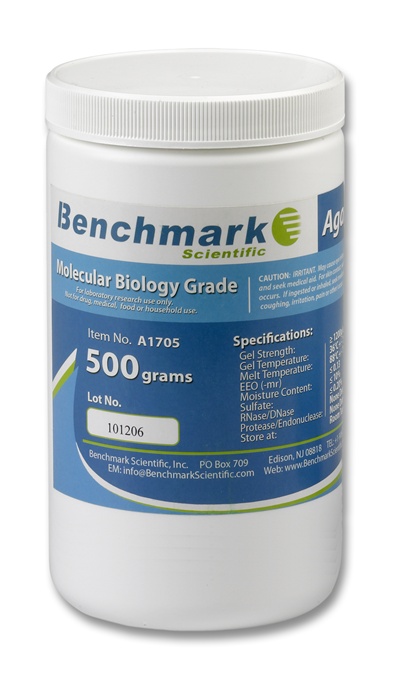
How does agar become agarose?
Agar is purified and broken down into the chemical, agarose. The chemical comes in several different forms. Agarose starts in a powder form and can be turned into a gel when the powder is mixed with water. The agarose gel has a consistency that is similar to rubber resins. When the agarose gel is combined with certain additives, the gel can also be rolled into small beads.
The many forms of agarose provide ample opportunities for the chemical to be used in several medical procedures and laboratory tests. Some of the procedures and tests include the following:
- Monitor the progression of a disease
- Collect information about a sample that has unknown properties
- Separate DNA, RNA and protein molecules
- Analyze molecular size
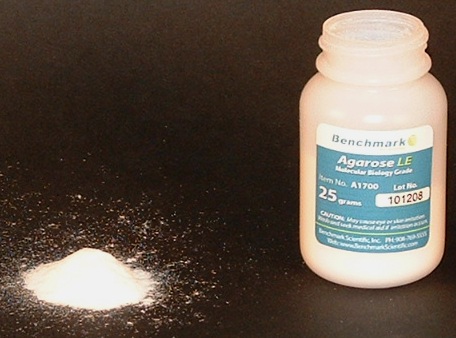
What makes agarose so special?
Like agar, agarose has several rare characteristics. The chemical has the ability to take on several different forms including a powder, gel and beads. It has large pores which allows for the easy passage and separation of molecules, including DNA and proteins. The chemical also carries a neutral charge, meaning that it is not positively or negatively charged. With the simple structure of agarose and its many uses, it easy to see why this chemical is used across so many professions.
Leave a Reply